
When the pain stops going away on its own
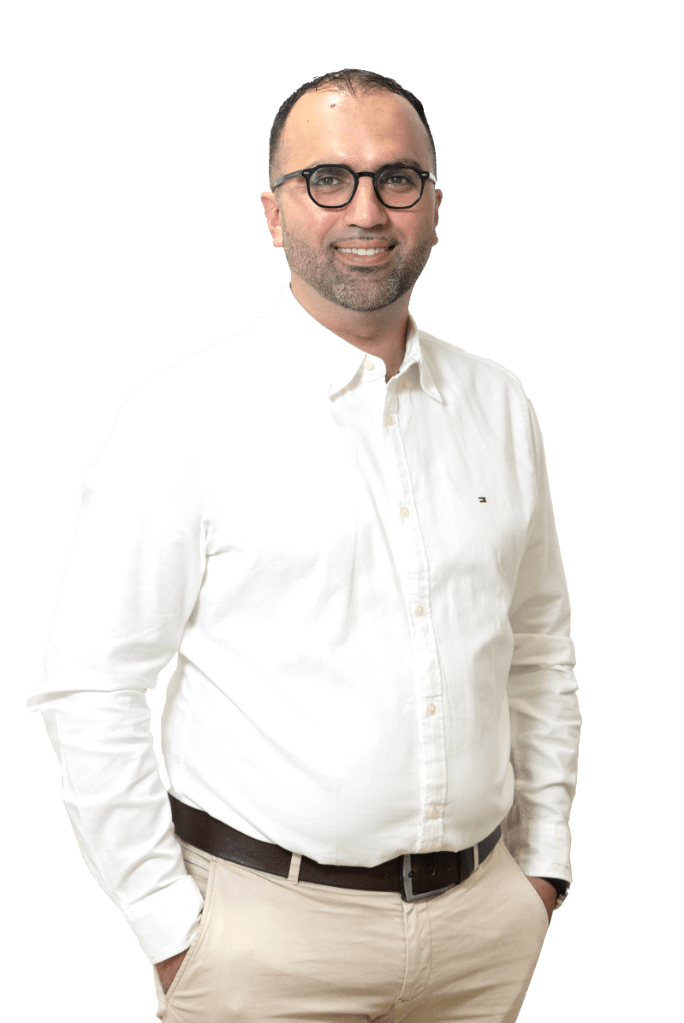
Dr. Said Saada — specialist in pain medicine and anaesthesiology. Senior physician in the Department of Anaesthesiology, Intensive Care and the Pain Unit at Meir Medical Centre. Precise diagnosis of where the pain actually comes from, and image-guided treatment aimed exactly there.
MedReviews
You probably got here after already trying a few things.
You saw your GP. Maybe an orthopaedist. You did physiotherapy, took painkillers, perhaps had a scan that showed something — or showed nothing at all, which was even more frustrating.
And meanwhile the pain stayed. It dictates how you sit, how you sleep, what you give up at the weekend.
Where does it hurt?
Choose whichever describes you best. Each page explains where the pain comes from, why what you have tried so far was not enough, and what can be done.

Lower back pain and disc herniation
“It hurts when I get up from a chair”
Learn more
Pain radiating into the leg
“It runs from my buttock down to my foot”
Learn more
Neck and shoulder pain
“After a day at the screen I cannot cope”
Learn more
Joint pain — knee, shoulder, hip
“Stairs have become a problem”
Learn more
Fibromyalgia
“My whole body hurts and nobody can find why”
Learn more
Nerve pain (neuropathic)
“Burning, numbness, pins and needles”
Learn more
Migraine and chronic headache
“The medication does not work any more”
Learn more
Facial and jaw pain
“A sharp pain like an electric shock”
Learn more
Chronic pain after surgery
“They operated and the pain came back”
Learn more
Pain after shingles
“The rash went, the pain stayed”
Learn more
Cancer pain
“The pain makes every day harder”
Learn moreNot every back pain is the same back pain
Two people with identical MRI findings can have entirely different sources of pain — and therefore need entirely different treatments.
That is why the clinic does not start with treatment. It starts with diagnosis: a thorough history, physical examination, reading the imaging, and in some cases a diagnostic block that pinpoints the source before anything is treated.
Only once we know where the pain comes from do we choose the treatment. And when we treat, we treat under ultrasound or fluoroscopic guidance, so the medication reaches exactly the right point.
The solution: treat the pain — and what the pain did to your life
Pain is only half the story. The other half is what it took: your sleep, your confidence to move, your ability to get through a working day. SAADA METHOD is built to treat both — which is why it does not stop at an injection.
What changes after a course of treatment
Responses differ from person to person, so no outcome can be promised. These are the things patients describe when the process works — and they are what is measured at every follow-up appointment:
- Sleeping through the night without being woken by pain
- Standing up, bending and walking without planning every movement first
- Getting back to work, to driving, and to time with family
- Reducing painkillers — under medical supervision
Sometimes the pain does not disappear entirely and the improvement is in function and sleep instead. That is also a success — and in many cases the most meaningful one.
Dr. Said Saada — pain medicine and anaesthesiology
Senior physician in the Department of Anaesthesiology, Intensive Care and the Pain Unit at Meir Medical Centre. Treats chronic pain from a wide range of sources, specialising in image-guided procedures.
What patients say
“A doctor who listens to the problem, explains clearly and understandably. It was a pleasure to listen and to understand.”
Sharon Barzilai“It was explained to me exactly what would happen and why, including what the treatment would not solve. That is what gave me the confidence to go ahead.”
Clinic patient“I came after two years of treatments that did not help. Here they first checked where the pain was actually coming from.”
Clinic patientWhat happens from the moment you get in touch
No surprises. Every stage is explained in advance, including what to expect and what not to.
First call
We find out what hurts, for how long, and what you have already tried.
Diagnostic appointment
History, physical examination and a review of the imaging you bring.
Treatment plan
Explained to you in full — including what to expect, and what not to.
Treatment
In most cases a short procedure in the clinic, under image guidance.
Follow-up
A review appointment and adjustment based on your response.
The clinic
Umm al-Fahm — Al-Dhahr
- Address:
- Maccabi clinic building, next to the police station, Umm al-Fahm
- Opening hours:
- Sunday–Saturday, 10:00–18:00
Not sure whether your pain can be treated?
That is exactly what the first appointment is for. Leave your name and phone number and we will get back to you.