
There is no one sitting posture that suits everyone. Even a comfortable, correct posture can cause discomfort when held for a long time without change. What reduces load is variety: changing positions through the day and taking short, regular movement breaks.
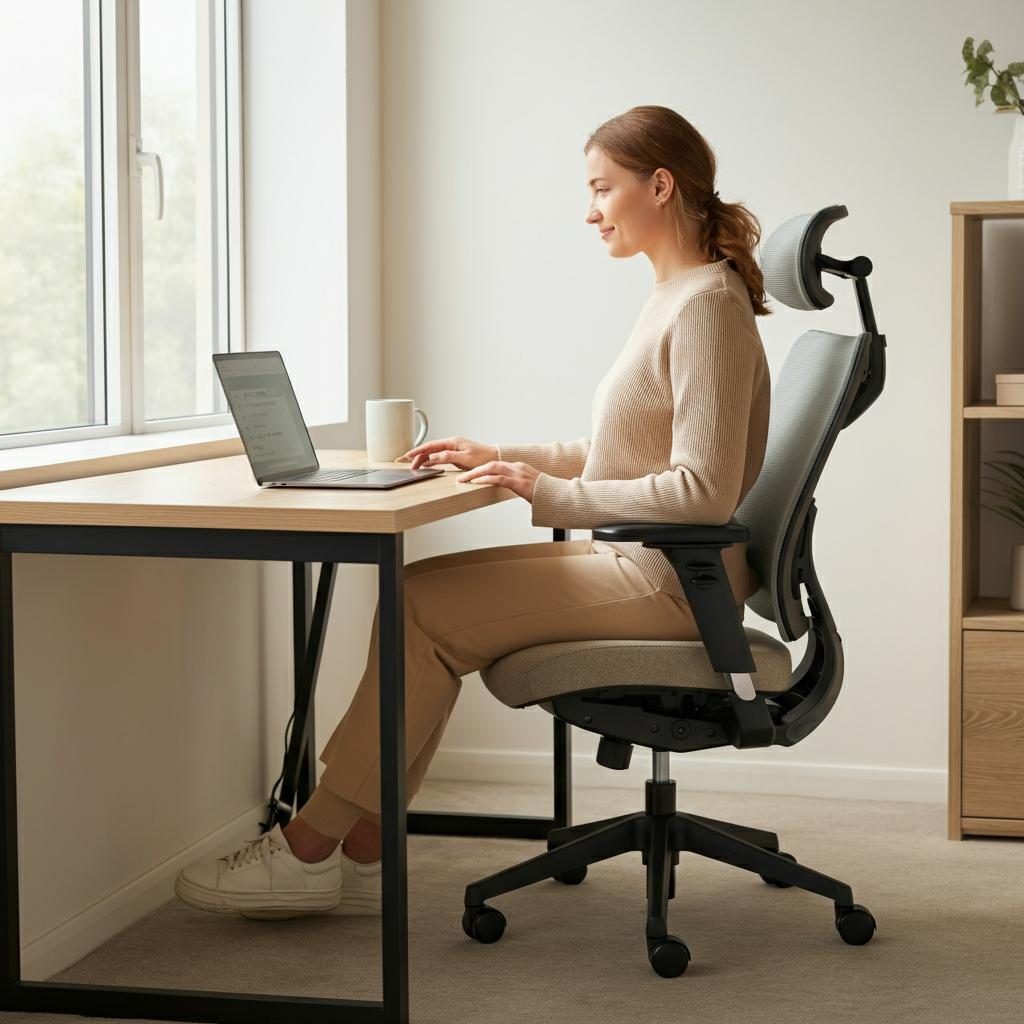
What many people believe
The idea is familiar: to prevent back pain you must always sit upright, with a straight back, in a fixed position. There is partial logic in it — sustained slumping genuinely does load the back.
But the body needs variety and movement. Even sitting in a comfortable, “correct” posture can cause discomfort if it is held for a long time without change. It is the cumulative load that matters, not the precise angle.
What works in a working day
- Change position every 30–45 minutes — lean back, sit up, cross your legs the other way.
- Stand for a moment: a glass of water, a phone call on your feet, a minute of walking.
- Set up the workstation: screen at eye level, a chair that supports the low back, feet supported.
- Spread the load — where possible, split the day between sitting and standing.
Prevention is part of treatment
In SAADA METHOD daily habits are part of the plan, particularly once pain has settled — because they affect how likely it is to return.
The best posture is usually the one you can change.
Frequently asked questions
So is "sit up straight" a myth?
Not a myth, but not an iron rule either. A reasonably upright posture beats sustained slumping, but no posture is designed to be held for hours on end.
How often should I get up?
A common practical guide is to change position or stand roughly every 30–45 minutes. Even a minute of walking or stretching makes a difference.
Will an ergonomic chair solve it?
It helps, but it is not a substitute for movement. A good chair makes a reasonable posture easier to hold; what prevents cumulative load is shifting between positions.
